
Temporary Mobile Home Housing While Building Your Home
Living in a mobile home on your land while your house is being built can be a practical, affordable choice. Here’s how to set it up, what it can cost, and what to do with the mobile home when you’re done.
Why a Mobile Home Works Well as Temporary Housing
Building a home often takes anywhere from about 9 months to a year and a half — sometimes longer when weather delays hit or contractors fall behind schedule. You need somewhere affordable and comfortable to live during that entire stretch. For many families, a mobile home on the building site is the most practical solution.

A singlewide set up on a building site — affordable, portable, and ready to live in.
It can be the most affordable option. A used singlewide can cost less than several months of hotel stays or apartment rent. Live in it during construction, then sell it when you’re done — depending on condition and the market, you may get back much of what you paid, so your main cost is setup and moving.
You’re on site every day. You can oversee construction in person, answer your contractor’s questions right away, and catch problems before they become expensive mistakes. You’re not driving across town to check on progress — you walk outside.
You help protect your investment. Construction sites are targets for theft. Lumber, tools, appliances, and copper wire can disappear from unoccupied building sites. Having someone living on the property is a strong theft deterrent.
It’s portable. When you’re done, a transport company can usually move it off your property in a day.
What You Need to Set Up a Temporary Mobile Home on Your Land
Before you move a mobile home onto your building site, you need to handle several things. Skipping any of these creates problems with your county, your utilities, or your comfort.
Building Department Approval
This is step one — before anything else. Contact your county or township building department and explain that you want to place a temporary mobile home on your property during construction. Many areas allow this, but they’ll set conditions and a time limit — usually a set period after your new home receives its Certificate of Occupancy to remove the mobile home. The U.S. Department of Housing and Urban Development sets federal construction and installation standards for manufactured homes, but local zoning and permit rules decide whether, and for how long, a temporary home can be placed. Get approval in writing before spending a dollar on anything else.
Power
You need electricity at the site. A generator can work short-term (run it outdoors, well away from windows, doors and vents), but for months of living you need a proper electrical connection. Many builds start with a temporary service pole and meter. Ask your utility and your building department whether the mobile home can be fed from that service, and have a licensed electrician make the connection — a temporary construction pole isn’t automatically approved to supply a dwelling.
Water and Sewer
You need running water and a way to handle waste. If you’re on well water, getting the well drilled and connected early can give you water for both the mobile home and construction. For sewer, you’ll either connect to a municipal system or need a septic system. Understanding mobile home septic tank requirements before placing the home saves you from expensive mistakes and code problems.
Steps and Safe Access
Mobile homes sit above ground level — you need steps to get in and out safely. Front and back steps are essential, especially with kids or elderly family members. Mobile home prebuilt steps are affordable, easy to install, and can go with the mobile home when you’re done. Don’t skip this — a makeshift cinder block setup is a fall hazard and may not pass local inspection.
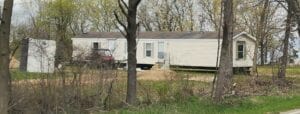
Temporary mobile home housing on a wooded lot during home construction.
Land Preparation
The ground where the mobile home sits needs to be level, compacted, well drained, and accessible for the delivery truck. You’ll need a cleared pad with working room around the home, a driveway or access path the transport truck can use, and a level, firm base for the piers. Even for a temporary setup, have the home installed and anchored by a qualified installer following the manufacturer’s instructions and your local rules.
Setup Checklist: Building department approval in writing. Power connected by a licensed electrician. Water and sewer ready. Land leveled, compacted and drained. Home set and anchored by a qualified installer. Steps installed for move-in day. Budget extra time beyond your estimated construction timeline — delays are common.
How Much Does Temporary Mobile Home Housing Cost?
Buying a Used Mobile Home
A used singlewide in decent condition often runs $5,000–$20,000 depending on age, size, and location. A used doublewide often runs $10,000–$35,000. The advantage of buying is that you can sell the home when construction is complete and recover part — sometimes most — of your money. Depending on local rents, buying and reselling can cost less than renting an apartment for the same period.
Renting a Temporary Mobile Home
Some companies deliver a mobile home to your site and rent it to you during construction, then pick it up when you’re done. Monthly costs are usually higher than buying and reselling, but there’s no hassle of finding a buyer afterward. Temporary housing like this is also sometimes arranged through insurance after a fire or severe weather.
Setup Costs
Beyond the home itself, budget for transport (roughly $2,000–$5,000), setup and leveling ($1,000–$3,000), a temporary power connection ($500–$2,000), and steps ($200–$800). If you need a well or septic, that can add $5,000–$15,000 or more — though those are costs you’d likely pay anyway for your permanent home. Get local quotes; these numbers vary a lot by area.
Other Temporary Housing Options Compared
Mobile Home on Site
Purchase cost, part of which you may recover when you sell. On-site security. Full kitchen, bathroom(s), bedrooms. Usually pet friendly. Often the most practical option for families.
RV or Camper
Rental or purchase cost varies. Very limited space. One small bathroom. Not built for long-term living, especially in winter. Waste tanks need regular dumping. Can work for 1–2 people short-term.
Hotel
Usually the most expensive option over many months. Little or no kitchen. No storage. Often not pet friendly. No money recovered.
Rental House or Apartment
Comfortable but off-site. You lose daily access to your build. Lease terms may not line up with your construction timeline.
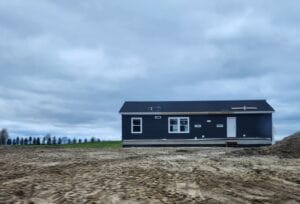
A doublewide provides plenty of space for a family during a long construction process.
What to Do With the Mobile Home When You’re Done
Once your new house has a Certificate of Occupancy and you’ve moved in, your county will typically give you a set timeframe to remove the mobile home. You have three main options.
Sell It Privately
List it on Facebook Marketplace or Craigslist, or contact a mobile home dealer. If you sell it for close to what you paid, your temporary housing cost was mostly the setup and moving expenses. Other people building on their own land are often looking for exactly this kind of home.
Sell It to a Dealer or Buyer
If you want it gone fast, mobile home dealers and cash buyers will purchase it directly. You’ll usually get less than a private sale, but it’s faster and simpler.
Move It to Another Property
If you own other land or know someone who needs a mobile home, have it transported to a new location. Transport often runs $2,000–$5,000 depending on distance, plus setup at the new site.
Thinking About Selling Instead?
When the new house is finished, the mobile home has to go. Selling it as-is is one option to compare with a private sale — I buy mobile homes, and you don’t have to fix anything first.
Frequently Asked Questions
Can I live in a mobile home on my land while building a house?
In many areas, yes. You need approval from your local building or zoning department before placing the home. Many jurisdictions allow temporary placement during construction but require removal within a set timeframe after your new home receives a Certificate of Occupancy. Get approval in writing before moving any home onto your property.
How long can I live in a temporary mobile home while building?
It depends on your county or township. Time limits vary, and some places allow extensions if construction is still active. Ask your building department for the exact limit, when the clock starts, and how to request an extension — and budget extra time beyond your contractor’s estimate for delays.
How much does temporary mobile home housing cost?
A used singlewide often costs $5,000–$20,000 to buy, plus transport, setup, power, steps, and utility connections. When you’re done, you can sell the mobile home and recover part of the purchase price. Your real cost depends on what you pay, what you sell for, and your local setup costs.
What do I need to set up a temporary mobile home on my land?
Building department approval, electrical service connected by a licensed electrician, a water connection, sewer or septic, a level compacted pad, proper setup and anchoring, and steps for safe entry and exit. Have utilities ready before the mobile home is delivered so you can move in sooner. For anchoring requirements, see our guide to mobile home anchors and wind zones.
Is an RV better than a mobile home for temporary housing while building?
For 1–2 people on a short timeline, an RV can work. For families, or for longer projects, a mobile home is usually much more comfortable — a full kitchen, full bathroom(s), separate bedrooms, and room for kids and pets. Over many months, that difference adds up.
What do I do with the mobile home when my house is built?
Sell it privately, sell it to a dealer or buyer, or have it transported to another property. Plan the sale before construction wraps up — your county will usually set a deadline for removal.