
Mobile Home Dryer Vent: Cleaning, Replacement & Safety Guide
A lint-clogged dryer vent is a real fire risk. Here’s how to clean, replace, and maintain your mobile home dryer vent to keep your family safe and your dryer running efficiently.
Why Dryer Vent Maintenance Is Critical
Dryer fires are one of the most preventable causes of house fires in the United States. Fire safety groups such as the National Fire Protection Association point to failure to clean the dryer and its vent as a leading cause of home dryer fires. In many mobile homes the duct runs through the floor and under the home, where lint can collect out of sight and is harder to inspect — so it pays to check it on a schedule.
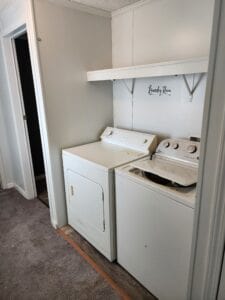
Proper dryer positioning with clear access to the vent connection makes maintenance easier and safer.
Beyond fire safety, a clogged dryer vent makes your dryer work harder, takes longer to dry clothes, increases your electric bill, and shortens the lifespan of the dryer itself. Most dryer vent problems are caused by lint buildup — and the fix usually takes about an hour once a year. For more fire safety tips specific to manufactured homes, see our guide on preventing mobile home fires.
Tools and Parts You’ll Need
As an Amazon Associate I earn from qualifying purchases.
Dryer Vent Cleaning Kit
A flexible brush kit (around 12 feet) that reaches through the duct length. The single most important tool for this job.
View on AmazonDryer Vent Duct & Clamps
4-inch semi-rigid aluminum ducting with metal clamps. Never use plastic, vinyl, or thin foil hose — they are fire hazards.
View on AmazonExterior Vent Cover
Weather-resistant louvered or flapped vent cover that keeps rain, snow, and pests out while letting lint and moisture exhaust freely.
View on AmazonVacuum Hose Attachment
Flexible vacuum attachment that reaches deep into the vent opening and behind the dryer to remove lint your brush can’t reach.
View on AmazonHow to Clean Your Mobile Home Dryer Vent (Step by Step)
This process takes 30–60 minutes and should be done at least once a year. If you do a lot of laundry, clean it twice a year. For most homes this is a straightforward DIY job.
Unplug Your Dryer
Always disconnect power before starting. Unplug from the wall outlet, or turn off the circuit breaker if hardwired. If it’s a gas dryer, turn off the gas supply valve and move the dryer gently so you don’t kink or strain the gas connector — if you smell gas at any point, leave the home and call your gas utility. Let the dryer cool before touching anything.
Pull the Dryer Away From the Wall
Carefully slide the dryer forward to access the vent connection on the back. Be gentle with the hose — old aluminum ducting can tear easily. This is also a good time to vacuum behind and under the dryer where lint accumulates.
Disconnect the Vent Hose
Loosen the clamp connecting the hose to the back of the dryer using a screwdriver or pliers. Carefully remove the hose. Check inside the hose for lint buildup — if it’s packed, replace the hose entirely rather than trying to clean it.
Clean the Vent Duct From Inside
Insert the flexible brush from your cleaning kit into the vent opening on the wall or floor where the hose was connected. Push the brush through the full length of the duct, rotating it to scrub lint off the walls. Pull it back out slowly — you’ll be surprised how much lint comes out. Use the vacuum hose attachment to clean up loose debris.
Clean From the Outside
Go outside and remove the exterior vent cover. Clean the opening and run the brush in from this end too. Working from both ends helps you reach the full length of the duct. Check that the exterior flap opens and closes freely — a stuck flap restricts airflow and traps lint.
Clean the Lint Trap and Housing
Remove the lint screen from inside the dryer and wash it with warm soapy water — dryer sheets can leave a film that reduces airflow over time. Use the vacuum attachment to clean inside the lint trap housing where the screen sits. Let the screen dry completely before reinstalling.
Reassemble and Test
Reconnect the vent hose with clamps, reinstall the exterior vent cover, and push the dryer back into position without crushing the hose. Plug it in (or turn the breaker back on) and run a test cycle with a small load. Go outside and check that you feel strong, warm airflow from the exterior vent. If airflow is weak, recheck connections for leaks or kinks in the hose.
How to Replace Dryer Vent Components
If your vent hose is crushed, torn, or made of plastic/vinyl — replace it right away. Damaged ductwork restricts airflow and is a fire hazard. Here’s how to replace the most common components.
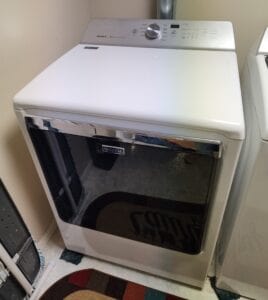
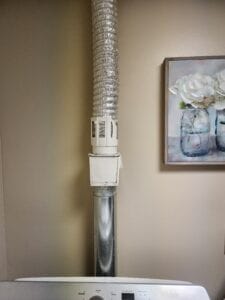
Proper dryer setup (left) and wall-mounted vertical vent with cleanout access (right).
Replacing the Vent Hose
Disconnect power and pull the dryer out. Remove the old hose by loosening the clamps at both ends. Measure the distance between the dryer exhaust port and the wall vent opening. Cut your new 4-inch semi-rigid aluminum ducting to length — leave a few extra inches for flexibility but avoid excess length since every extra foot adds resistance. Attach with clamps at both ends. Never use screws inside the ductwork — they catch lint and create blockages. Never use plastic or vinyl hose — these are fire hazards and are not allowed by building codes or most dryer manufacturers.
Replacing the Exterior Vent Cover
If the exterior cover is cracked, the flap is stuck, or birds have nested inside — replace it. Unscrew the old cover, clean the vent opening, and attach the new louvered or flapped cover with exterior-grade screws. Apply a bead of exterior caulk around the edge to seal against moisture. Make sure the flap opens freely when the dryer runs.
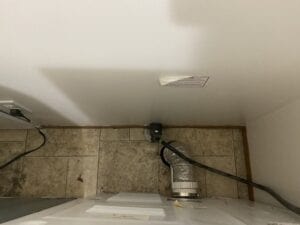
Flexible aluminum vent hose properly connected — no kinks, no excess length, no screws inside.
Common Mobile Home Dryer Vent Problems
Dryer Takes Forever to Dry Clothes
This is most often a clogged vent. Clean the full duct length from both ends. If cleaning doesn’t fix it, check for a crushed hose behind the dryer, too many bends in the ductwork, or a failing dryer heating element. The vent duct should be as short and straight as possible — every 90-degree turn reduces airflow.
Mouse or Pest in the Dryer Vent
Mice love dryer vents — they’re warm, dry, and the lint makes perfect nesting material. Disconnect power, remove the exterior vent cover, and look inside with a flashlight. If you see a nest, remove it carefully with gloves. Set traps near the opening with peanut butter bait. After removal, clean the entire duct and install a pest-guard vent cover made for dryers (a flap or louvered design). Avoid putting fine mesh screen over a dryer exhaust — lint clogs screens quickly, which blocks airflow and creates a fire risk. For ongoing pest issues, see our guide on mice and your mobile home.
Floor Vent Systems
Many mobile homes route the dryer vent through the floor and out through the crawl space instead of through the wall. Floor vents require extra attention because lint can accumulate in the horizontal run under the home. Make sure the duct runs all the way out past the skirting — never let it end in the crawl space, which creates moisture and fire hazards. Clean floor vent systems twice a year since they tend to collect more lint than wall vents.
Dryer Vent Smells Like Burning
Stop using the dryer immediately. A burning smell often means lint has built up and is being heated. Unplug the dryer, clean the entire vent system thoroughly, and check the lint trap housing inside the dryer for trapped lint. Do not use the dryer again until you’ve confirmed the vent is completely clear and airflow is strong at the exterior opening. If the smell continues after cleaning, have the dryer checked by an appliance repair technician before using it again.
Would You Rather Sell Than Repair?
If the dryer vent is just one item on a long list of repairs, selling the home as-is is one option to compare. I buy mobile homes that need work, and you don’t have to fix anything first.
Frequently Asked Questions
Does a dryer vent have to go outside in a mobile home?
Yes. Standard vented dryers must exhaust to the outside to safely remove hot air, moisture, and lint. Venting into the crawl space, attic, or any interior space creates serious moisture, mold, and fire hazards and is not allowed. The duct must end outside the home with a proper vent cover. Manufactured homes are built to the federal HUD Code, set by the U.S. Department of Housing and Urban Development.
How often should I clean my mobile home dryer vent?
At least once a year. If you do a lot of laundry, clean it twice a year. Mobile homes with floor vent systems should also be cleaned twice a year since the horizontal run under the home collects more lint. Clean the lint trap after every single load — it only takes a few seconds and cuts down on lint buildup in the duct.
What type of duct should I use for a mobile home dryer vent?
Use 4-inch semi-rigid or rigid metal (aluminum) ducting, and follow your dryer manufacturer’s instructions. Never use plastic, vinyl, or thin foil ducting — these tear easily, collect lint faster, and are fire hazards. Use metal clamps to secure connections. Never use screws inside the ductwork because the screw tips catch lint and create blockages that restrict airflow.
Why does my dryer take so long to dry clothes?
A clogged vent is the most common cause. Lint buildup restricts airflow, which means moist air can’t escape and clothes stay damp. Clean the full vent duct from both ends. Also check for a crushed or kinked hose behind the dryer, too many bends in the ductwork, a dirty lint trap, or a failing heating element. After a thorough vent cleaning, many dryers go back to drying in one normal cycle.
Can I clean my mobile home dryer vent myself?
Yes. It’s a straightforward DIY job that takes 30–60 minutes with a cleaning kit brush and a vacuum. No special skills or tools required beyond what’s listed in this guide. Professional dryer vent cleaning commonly runs around $100–$200 — doing it yourself costs about $30 for a brush kit you can reuse every year.
Can I vent my dryer into the crawl space?
No. Venting into the crawl space creates heavy moisture buildup, promotes mold growth, deteriorates floor joists and insulation, and is a fire hazard from lint accumulation. It also violates building codes. The vent must always end outside the home with a proper louvered or flapped cover.
How do I keep mice out of my dryer vent?
Install a pest-guard vent cover designed for dryer exhaust (flap or louver style rather than fine mesh, which clogs with lint). Check the exterior vent opening regularly for nesting material and lint. Make sure the vent flap closes fully when the dryer isn’t running — a stuck-open flap is an open invitation for mice, birds, and insects.