
Mobile Home Snow Roof Damage
Mobile home roofs are built to carry only so much weight. Here is how to judge how much snow is too much, how to remove it safely, and which warning signs mean your roof is in trouble.
Snow Load Quick Facts
Snow weight varies a lot with moisture, so treat these as rough guides. Repairs after a roof failure are expensive, and prevention is almost always cheaper.
Why Snow on a Mobile Home Roof Is Dangerous
Mobile homes have a lighter roof frame than most site-built homes, so snow weight can become a structural problem faster than many owners expect.
This is a safety issue, not just a maintenance issue
A mobile home roof under too much snow can fail with little warning. Snow can also block roof vents, and blocked vents on gas appliances can let carbon monoxide build up inside. Together, these are among the most serious winter hazards for mobile home owners.
Roof Collapse
HUD Code homes are built to a roof design load of 20, 30 or 40 pounds per square foot depending on the roof load zone. Much of the country is in the 20 lbs/sq ft South zone, while many northern Michigan counties are in the 30 lbs/sq ft Middle zone. Wet, heavy snow can reach that quickly, especially after several storms without removal. A collapse can cause serious injury and leave the home unlivable.
Leaks and Water Damage
As snow melts and refreezes, it works into seams, vents and small cracks in the roofing. Water that gets inside can lead to mold, rotting wood and, over time, weakened walls and ceilings.
Blocked Vents and Gas Buildup
Snow packed around roof vents prevents proper ventilation. If you use gas appliances such as a furnace, water heater or stove, blocked vents can let carbon monoxide build up inside your home. Install CO detectors and check vents after every heavy snowfall.
Ice Dams
When heat escapes through the roof and melts the bottom layer of snow, the meltwater runs to the edge and refreezes into an ice dam. That blocks drainage and forces water back under the roofing, causing hidden leaks inside the home.
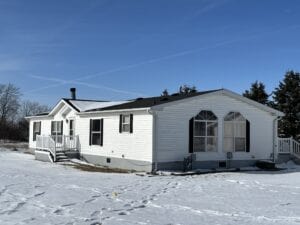
How Much Snow Can Your Mobile Home Roof Handle?
It depends on your home’s roof load rating, the type of snow, the roof’s age and condition, and how much has built up.
Start with your home’s data plate, usually inside a kitchen cabinet, a bedroom closet or near the electrical panel. Under the HUD Code (24 CFR 3280.305), it lists the roof load zone the home was built for: South (20 lbs/sq ft), Middle (30 lbs/sq ft) or North (40 lbs/sq ft). Homes built before the HUD Code took effect in June 1976 were not built to these standards and may carry less. An older or damaged roof may carry less than its rating.
| Snow Type | Rough Weight per Inch | Approx. Depth to Reach 20 lbs/sq ft | What to Do |
|---|---|---|---|
| Light / dry snow | ~1.0–1.25 lbs/sq ft | 16–20 inches | Monitor closely |
| Packed snow | ~2.0 lbs/sq ft | About 10 inches | Remove promptly |
| Wet / heavy snow | ~2.5–3.0 lbs/sq ft | 7–8 inches | Remove right away |
| Ice layer | ~5.0+ lbs/sq ft | Any significant layer | Call a professional |
These weights are rough estimates; real snow density varies widely. The depth column assumes a 20 lbs/sq ft (South zone) roof in good condition. Many owners start raking at around 4 inches, and sooner with wet, heavy snow.
Warning Signs Your Roof Is Under Too Much Stress
- Doors or windows suddenly hard to open or close
- New cracks in walls or ceilings
- Popping or cracking sounds from the roof
- Visible bowing or sagging in the roof line
- Water stains appearing on interior ceilings
If you notice any of these, get everyone out of the home and call a professional right away.
When Your Roof Is Probably OK
- Less than 4 inches of light, fluffy snow
- Roof was recently inspected and in good condition
- Vents are clear and unobstructed
- No prior water damage or structural issues
- Heating cables installed and working
Even when conditions look safe, check your roof after every significant snowfall.
How to Prevent Snow Buildup on Your Mobile Home Roof
Prevention costs far less than repairs. These steps help protect your roof before snow becomes a problem.
Install Heating Cables Along the Roof Edge
Heating cables run along the eaves and in gutters, melting snow and ice before it builds into a dam. They are one of the more effective ways to prevent ice dams and cut down on how much snow you have to remove by hand. Install them before winter arrives, not during a storm.
See the heating cable options further down this page.
Keep Gutters and Downspouts Clear
Clogged gutters keep meltwater from draining off the roof, which speeds up ice dam formation. Clean your gutters in late fall before the first snow, and check them mid-winter for ice blockages. Gutter guards can help reduce debris buildup throughout the year.
Inspect and Seal Your Roof Before Winter
Small cracks, gaps around vents and worn flashing become big weak spots once snow and ice are on the roof. Do a full visual inspection in the fall. Look for lifted edges, cracked sealant and soft spots, and fix them before the first freeze.
Consider a Metal Roof or Roof Over
Metal roofing has a smooth surface that lets snow slide off more easily, which can reduce how much builds up. A roof-over system also adds a layer of protection and can improve insulation. It is a bigger investment upfront, but it can reduce snow load worries over the long term.
Install Carbon Monoxide Detectors
Blocked roof vents during heavy snow can cause dangerous CO buildup inside your home. Every mobile home with gas appliances should have working carbon monoxide detectors near sleeping areas and near those appliances. Test them monthly and replace batteries as the manufacturer recommends.

How to Safely Remove Snow from Your Mobile Home Roof
Removing snow the wrong way can damage your roof or get you hurt. Follow these steps to do it safely.
Use a Roof Rake, Not a Shovel
A long-handled roof rake lets you pull snow off from the ground without climbing on the roof. Stand clear of where the snow will fall, start at the edge and pull snow toward you, working in sections. Never use a metal shovel, because the rigid edge will damage your roofing. Look for a rake with a plastic or foam head, and stay well away from overhead power lines, especially with a metal handle.
Work From the Edge Toward the Peak
Start at the lowest edge of the roof and work upward toward the peak. That keeps heavy snow from sliding down in an uncontrolled way. Remove snow in manageable sections instead of trying to clear the whole roof in one pass.
Clear Channels to Prevent Ice Dams
From the ground, use the roof rake to clear a strip along the eaves after removing the bulk of the snow. This gives meltwater a path off the roof instead of letting it pool and refreeze at the edges. Clearing a 2–3 foot strip along the eaves is often enough to help prevent ice dams.
Don’t Use Rock Salt or Sidewalk Ice Melt on Your Roof
Rock salt and many sidewalk de-icers can corrode roofing materials, fasteners and gutters, and can harm the soil and plants around your home. Stick mainly to mechanical removal. If you need to open a channel through an ice dam, a common approach is calcium chloride ice melt, used sparingly in a nylon stocking or tube laid across the dam.
Call a Professional for Heavy Ice or Unsafe Conditions
If snow has turned to ice, if you can’t safely reach the roof from the ground, or if you see warning signs of structural stress, call a roofing contractor. Choose one who has worked on mobile homes, since their roofing systems differ from site-built homes, and confirm they carry liability insurance before work begins.

Insurance Coverage for Snow Roof Damage
Not every mobile home insurance policy treats snow damage the same way. Here is what to check before you need to file a claim.
What to Verify in Your Policy
- Does it cover roof collapse from snow weight?
- Is ice dam damage included or excluded?
- Are contents covered if the roof collapses?
- Is there a separate deductible for weather events?
- Does it require proof of regular maintenance?
If Damage Occurs, Document Everything
Before any cleanup or repairs, photograph the damage from every angle, inside and out. Write down dates and the weather conditions. Keep every receipt for emergency repairs. Contact your insurance company as soon as you can and ask for written confirmation of your claim number.
If a claim is delayed or denied without a clear reason, ask for a written explanation. You can also contact your state’s insurance regulator if needed.

Products That Help Protect Your Roof This Winter
These products can help prevent snow and ice damage on mobile home roofs.
As an Amazon Associate I earn from qualifying purchases.
Shop on Amazon Long-Handled Snow Roof RakeA telescoping handle reaches the roof from the ground. A foam or plastic head is gentler on roofing material.
Shop on Amazon Gutter GuardsHelp keep debris out of gutters so they are clear when meltwater needs to drain. Easy DIY install before winter.
Shop on Amazon Roof Leak Repair TapeWaterproof flashing tape for sealing small cracks and gaps before winter. Check the label to confirm it is made for your roof surface.
Shop on Amazon
Would You Rather Sell Than Repair?
If a hard winter left your roof damaged and the repair bill looks bigger than you want to take on, selling the home as-is is one option to compare. I buy mobile homes that need work, and you don’t have to fix the roof first.
Frequently Asked Questions
Can leaving snow on my mobile home roof cause damage?
Yes. Too much snow can cause structural damage, roof collapse, water leaks and blocked vents. HUD Code homes are rated for a roof load of 20, 30 or 40 pounds per square foot depending on their zone (check your data plate), and wet snow can reach a 20 lbs/sq ft rating faster than most people expect.
How do I know if I’m exceeding the maximum snow load?
Watch for warning signs: doors or windows that suddenly stick, new cracks in walls or ceilings, popping sounds from the roof, or visible sagging in the roof line. If you see any of these, get out of the home and call a professional right away. Your home’s data plate shows the roof load zone it was built for.
Should I rake snow off my roof?
Yes. Use a long-handled roof rake from the ground. Start at the edge and work upward in sections. Never use a metal shovel, and avoid climbing onto the roof. Many owners start raking at around 4 inches, but act sooner with wet, heavy snow.
How do I prevent ice dams on a mobile home?
The most effective prevention combines roof heating cables along the eaves, gutters kept clear so water can drain, and good insulation so heat doesn’t escape unevenly through the roof. Raking a clear strip along the roof edges also helps meltwater run off before it refreezes.
Will my insurance cover snow roof damage?
Coverage varies by policy. Review your policy for snow load collapse, ice dam damage and water intrusion caused by winter weather. Some policies have maintenance requirements, so a claim could be harder if the roof was neglected. Contact your insurer before winter to clarify what is covered.
How often should I check my roof during winter?
Check after every significant snowfall and again after any rapid temperature change, since freeze-thaw cycles are hard on roofs. If you live in a heavy snow area, make it a routine. Even a quick look from the ground for depth and sagging can catch problems before they become emergencies.