
Mobile Home Generators: Best Options, Sizing & Top Picks
Power outage? Off-grid living? Backup power matters in a mobile home. This guide walks through the main mobile home generator types — portable, Generac standby, solar, and diesel — so you can choose the right one for your home.
As an Amazon Associate I earn from qualifying purchases.
If you own a mobile home, a reliable generator is worth thinking about before you need one. When the grid goes down, your heating, cooling, refrigerator, and any medical equipment all depend on having a backup power source ready to go.
There are more generator options today than ever. Whether you need a portable unit for occasional outages, a Generac standby generator that kicks on automatically, a solar generator for off-grid or eco-conscious living, or a diesel unit for extended runtime — there’s an option that fits your budget and your setup. Many of them can be ordered online and shipped to your door.
This guide covers what size generator you need to run a mobile home, the main types for different situations, some picks at different price points, how to connect your generator safely, and what CPSC generator safety guidelines say every homeowner needs to know before firing one up.
Carbon Monoxide Warning — Read Before You Start
Never run a generator indoors, inside a shed or garage, in a carport, under the home, or near doors, windows, or vents. Generator exhaust contains carbon monoxide, which you can’t see or smell and can kill in minutes. To power your home’s wiring, use a transfer switch installed by a licensed electrician — never backfeed through a wall outlet or dryer plug.
What Size Generator Do I Need to Run a Mobile Home?
This is one of the most common questions mobile home owners ask — and the answer depends on your home’s size and what you need to power. Undersizing a generator is a common mistake. Use this table as a starting point.
| Home Size / Situation | Min. Wattage | Suggested Size | What It Powers | Difficulty |
|---|---|---|---|---|
| Small single-wide (up to 700 sq ft) | 3,000W | 3,500–4,000W | Lights, fridge, TV, fans, phone charging | Easy |
| Average single-wide (700–1,000 sq ft) | 4,000W | 5,000–6,500W | Above + window AC unit or small furnace | Easy |
| Double-wide (1,000–1,800 sq ft) | 6,500W | 8,000–10,000W | Above + central HVAC, electric water heater | Moderate |
| Full house run (all appliances) | 10,000W | 12,000–15,000W | Everything including electric range, dryer | Needs Transfer Switch |
| Essentials only (outage survival) | 2,000W | 2,000–3,000W | Fridge, lights, phone, small heater/fan | Easiest |
Important: Starting Watts vs. Running Watts
Air conditioners, refrigerators, and pumps can need 2–3x their running wattage to start up. For example, an AC that runs at 1,500W may need 3,000–4,500W for a moment when it kicks on. Always check the starting wattage of your largest appliance and size your generator to handle it — not just the running load. When in doubt, go one size bigger.
For many mobile homes, a 5,000–7,500 watt generator hits the sweet spot — it’s enough to power your essentials plus a window AC or furnace, without costing a fortune. Your appliance labels (or an electrician) can help you total up what you actually need to run at the same time.
Mobile Home Generator Options to Consider
These picks cover different use cases and budgets. Each link goes to Amazon, where you can compare wattage, features, and current prices.
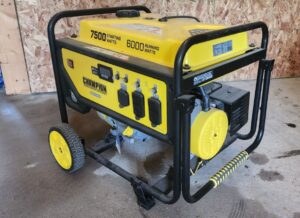
Portable Wheeled Generator — Good for Single-Wides
Portable power with enough wattage to run your essentials. Easy to start, easy to move. A common choice for mobile homeowners who need backup power without a permanent installation.
Shop on AmazonMobile Home Generators — All Price Ranges
Browse dozens of options at different wattages and price points. From 2,000W inverter models to 10,000W+ whole-home units, you can compare what fits your mobile home.
Browse All Options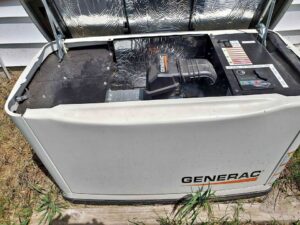
Generac Generator for Mobile Home — Automatic Backup
A Generac standby generator kicks on automatically when the power goes out — no running outside, no pulling a cord. Runs on natural gas or propane for long runtime. Requires professional installation.
Shop Generac on AmazonSolar Power Generator — Silent, No Fuel
No exhaust, nearly silent, no fuel to store. Charges from solar panels or a wall outlet. A good fit for off-grid living or everyday backup for essentials.
Shop Solar GeneratorsPropane Generator — Clean Burning & Long Storage
Propane burns cleaner than gasoline and stores for a long time — no fuel stabilizer, no stale gas problems. A smart choice if your mobile home already runs on propane for heating or cooking.
Shop Propane GeneratorsTypes of Mobile Home Generators: Which Is Right for You?
Every generator type has a different use case. Here’s a breakdown of the four main types so you can make the right decision for your home and budget.
Portable Gas Generator
The most popular and affordable option. Runs on gasoline, easy to store, and powerful enough for most mobile homes. Best for occasional outages where you just need to power essentials.
Pros: Affordable, widely available, easy to use
Cons: Needs stored fuel, can be loud, manual start
Generac Standby Generator
A permanent installation that automatically starts when the power goes out. Runs on natural gas or propane — no storing fuel cans. A low-hassle backup option for a mobile home if your budget allows.
Pros: Automatic, long runtime on a gas line, whole-home power
Cons: Higher upfront cost, requires professional install
Solar Power Generator
A battery-based system charged by solar panels — no fuel required. Solar generators combine quiet operation, no exhaust, and free energy from the sun. Works well for essentials and small homes.
Pros: No fuel cost, quiet, no fumes
Cons: Higher upfront cost, limited capacity on cloudy days
Diesel Generator
Diesel generators for home use offer strong fuel efficiency and long continuous runtime. More expensive upfront but often cheaper to run long-term. Suited to extended outages or rural properties far from gas lines.
Pros: Fuel efficient, long runtime, durable
Cons: Loud, higher upfront cost, diesel storage needed
Generac Generator for Mobile Home: Is It Worth It?
A Generac standby generator is about the most hands-off backup power setup available. When your power goes out — even at 2am during a storm — the unit detects the outage and starts automatically within seconds. You don’t flip a switch or go outside. Your lights stay on, your HVAC keeps running, and your fridge keeps cold.
Generac is one of the best-known names in home standby generators in the United States, with models in a range of sizes. The key advantages for mobile home owners:
- Runs on your existing natural gas or propane line — no storing fuel cans
- Uses an automatic transfer switch — no backfeeding risk when installed properly
- Quieter than many portable generators
- Manufacturer warranty on residential models (check the terms for the specific model)
- Remote monitoring via smartphone app on many models
- Available in sizes from around 7kW (small mobile homes) to 22kW and up (large double-wides)
The trade-off is cost. Expect to pay roughly $2,000–$5,000 for the unit plus $1,500–$3,500 for professional installation. If you live in an area with frequent outages or depend on power-sensitive equipment (medical devices, well pump, sump pump), the peace of mind can be worth it.
For mobile homeowners who want automatic, whole-home backup power, a standby generator like the Generac is worth pricing out.
Shop Generac GeneratorsSolar Power Generators for Mobile Homes & Small Homes
Solar generators have grown in popularity for mobile homes and small homes over the past few years. Unlike gas or diesel generators, they produce no exhaust, run quietly, and cost nothing to fuel once you’ve bought the unit. They’re an especially smart choice if you want backup power that works even when you can’t get to a gas station.
A solar power generator system consists of two parts: a portable power station (the battery and inverter) and solar panels to recharge it. Larger systems can power your refrigerator, lights, fans, a small AC unit, and electronics for hours or even days depending on the capacity you choose.
What to Look for in a Solar Generator for a Mobile Home
- Capacity (Wh): 1,000–2,000Wh handles essentials for 8–12 hours. 2,000–5,000Wh can power a full day of use including a small AC
- Output wattage: Look for 2,000W+ output to handle surging appliances like refrigerators
- Recharge speed: Fast solar input (400W+ solar compatible) means shorter recharge windows
- LiFePO4 battery chemistry: Generally safer, longer-lasting, and more stable than other lithium-ion chemistries — especially in temperature extremes
- AC outlets: Make sure it has enough standard outlets for your setup
Solar generators suit mobile homeowners who want quiet, exhaust-free backup power, off-grid capability, or less reliance on the grid. They pair well with a rooftop solar panel system.
Want to go all the way solar? Read the full guide: Solar Panels for Mobile Homes — covers panel types, installation, costs, and which systems work best on manufactured housing roofs.
For a solar generator that works out of the box with no installation required:
Shop Solar Generators on AmazonHow to Connect a Generator to a Mobile Home Safely
Connecting a generator incorrectly is one of the most dangerous things a homeowner can do. Follow these steps every time — and check FEMA’s power outage preparedness guide for additional safety protocols.
-
Never Backfeed Through an Outlet
Never plug a generator into a wall outlet, dryer outlet, or any receptacle in the home to “feed” power backward into the wiring. Backfeeding can electrocute you, utility line workers, or neighbors, and can start a fire. Either plug appliances directly into the generator with proper cords, or use a transfer switch (Step 4).
-
Position the Generator at Least 20 Feet Away
Never run a generator inside your mobile home, in a shed, garage, or attached storage area, in a carport, under the home, or near any door, window, or vent. Carbon monoxide from generators is odorless, colorless, and can be fatal within minutes. Keep it outside, at least 20 feet from the home, with the exhaust pointed away.
-
Use the Correct Extension Cord Gauge
Undersized cords overheat and can cause fires. Use heavy-duty, outdoor-rated cords — 10-gauge or heavier for high-wattage appliances. The longer the cord, the heavier the gauge needs to be. Check the cord’s wattage rating before using it.
-
Install a Transfer Switch for Direct Connection
If you want to power your mobile home through the electrical panel rather than with extension cords, you need a transfer switch (or approved interlock) installed by a licensed electrician. This is non-negotiable — it prevents dangerous backfeeding and protects utility workers. Before switching over, turn off the main breaker as the electrician shows you.
-
Install Carbon Monoxide Detectors
Every home running a generator should have working CO alarms (battery-operated or plug-in with battery backup), especially near sleeping areas. Test them and check batteries before storm season. A mobile home has less interior air space, so CO can build up quickly if exhaust gets inside.
-
Test Run Before You Need It
Don’t wait for an emergency to find out your generator won’t start. Test run it outdoors regularly, change the oil per the manufacturer’s schedule, and use fuel stabilizer in stored gasoline.
Carbon Monoxide Kills — Take This Seriously
The CPSC warns that portable generators cause many carbon monoxide deaths every year, especially after storms and power outages. Never operate a generator in an enclosed or partly enclosed space — including a carport or under the home — even with a window or door cracked open. If your CO alarm sounds or you feel dizzy, sick, or weak, get to fresh air right away and call 911.
Would You Rather Sell Than Repair?
If generator costs are one more item on a long list of repairs and upkeep, selling the home as-is is one option to compare. I buy mobile homes that need work, and you don’t have to fix anything first.
Mobile Home Generator FAQ
Common questions mobile home owners ask about backup generators.
Can you run a mobile home off a generator?
Yes. Mobile homes run on standard electrical systems and connect to generators the same way any home does. The key is choosing a generator with enough wattage for your home’s size and needs. Many single-wides run fine on a 5,000–7,500W generator for essential power. For whole-home power including central HVAC, you’ll want 10,000W+ and a proper transfer switch installed by a licensed electrician.
What size generator do I need to run a mobile home?
For a small single-wide running essentials (fridge, lights, fans, TV), a 3,500–5,000W generator will usually cover you. For a mid-size single-wide with a window AC unit, go 5,000–7,500W. For a double-wide with central HVAC, you’re looking at 8,000–12,000W. Always check the starting wattage of your AC or furnace — it’s typically 2–3x the running wattage and is often the deciding factor in your generator size. When in doubt, go one size up.
Is a Generac generator good for a mobile home?
Generac is a popular choice for mobile home backup power. Their standby units run on your natural gas or propane line (no fuel storage) and start automatically within seconds of a power outage. The main consideration is installation cost ($1,500–$3,500 by a licensed electrician) plus the unit itself. For mobile homeowners who want automatic backup power, it’s worth getting quotes.
Where do I put a generator for a mobile home?
Always outside, at least 20 feet away from any door, window, or vent — and positioned so exhaust blows away from the home. Never inside, in an attached storage room, in a garage or shed, in a carport, under the home, or in any enclosed space. For standby generators like Generac, a licensed installer will determine the permanent location following local code requirements. For portable generators, keep them on level, dry ground, protected from rain with a cover made for generators (never enclosed), and away from anything flammable.
What fuel type is best for a mobile home generator?
It depends on your situation. Gasoline is the most accessible and works well for portable generators — just rotate your stored fuel and use stabilizer. Propane burns cleaner and stores for a long time, making it a good fit if you already have a propane tank for your home’s other systems. Natural gas (through a standby generator like Generac) gives you long runtime with no storage concerns, but requires a gas line connection. Diesel is fuel-efficient for extended runtime but is louder and diesel storage requires more attention. For most mobile homeowners, gasoline portable or propane/gas standby are the top two choices.
How much does it cost to install a generator for a mobile home?
A portable generator needs no installation if you plug appliances into it with extension cords; a transfer switch for panel connection typically runs about $300–$900 installed. A full standby generator setup — unit, transfer switch, gas line connection, and electrician labor — typically runs about $3,500–$8,500 total. Prices vary by region and complexity, so get 2–3 quotes from licensed electricians.
Generator Safety & Energy Resources
Official sources for generator safety and home energy information.